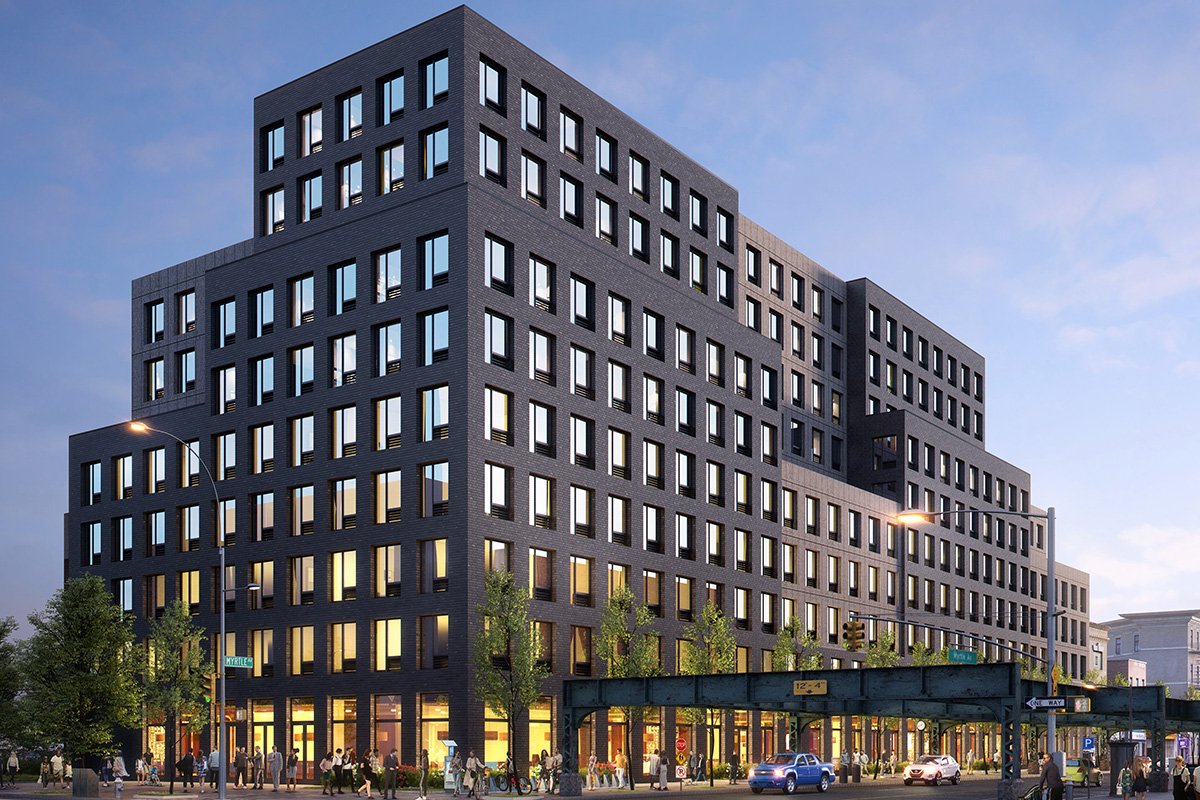
New York City has incredibly complex set of zoning regulations and many different zoning districts. The New York City Zoning Resolution establishes the limitations and restrictions for property development governing land use as well as building bulk, height, density, and size. You may own a property who’s current restrictions limit the use or development making it difficult to build a profitable development. The good news is there it is possible in certain cases to attain a rezoning to change your zoning district to a more favorable one that allows for greater development potential than your current zoning.
New York City rezoning involves changing a property’s zoning district via the Uniform Land Use Review Procedure (ULURP). This process can alter the district’s permitted use, such as converting manufacturing to residential, or increasing development potential through “upzoning” for example changing an R3 to an R6 zone.
My name is Jorge Fontan, and I am an architect in New York and owner of Vinculum Architecture, an architecture firm based in Manhattan. At Vinculum we work on various project types including rezoning and upzoning properties throughout the city. In this article I will review some of the different types of rezonings we can request from the City Planning Commission.
Rezoning For Change of Use
New York City’s zoning system divides the city into three primary zoning categories: Residential (R), Commercial (C), and Manufacturing (M). Property owners often seek to rezone their parcels to a different use—for example, changing a manufacturing district into a residential zone can significantly increase property value and facilitate the development of new housing. However, rezoning is not guaranteed; the city reviews each application on a case-by-case basis.
As an architect working on many rezoning applications I always begin by thoroughly reviewing the neighborhood context to ensure the proposed change is compatible with the surrounding area and likely to be well-received during the review process.
Upzoning
Upzoning is a common form of rezoning that involves increasing the allowed development scale within the same zoning use category (Residential, Commercial, or Manufacturing). In this scenario, the base designation (R, C, or M) remains unchanged, but the specific district or subdistrict designation is increased. For instance, converting an R5 to an R7 district is an example of upzoning. This approach significantly increases the potential size of a building, impacting metrics like floor area ratio (FAR), height, and density while staying in the same use group.
We recently successful upzoned a few properties in Bay Ridge, Brooklyn. This rezoning involved converting several properties from R3X to an R6A district. This change allowed the property owner to transition from the constraints of developing a single- or two-family home to constructing a forty-unit multifamily residential building. This specific project, which successfully went through the Uniform Land Use Review Procedure (ULURP), highlights how strategic rezoning can dramatically reshape development opportunities within New York City.
More details on this approved rezoning in Brooklyn are available in our other article on Our Approved Rezoning in Bay Ridge Brooklyn.
Mandatory Inclusionary Housing
When residential rezoning is proposed in New York City, the City Planning Commission, and the City Council nearly always require the implementation of Mandatory Inclusionary Housing (MIH). This program permanently mandates the inclusion of a specific percentage of rent-regulated, affordable apartments within the newly permitted development area.
The policy does not require the entire building to be an affordable housing complex. Instead, it results in mixed-income buildings where a certain percentage of units are reserved for qualifying low- or moderate-income tenants, while the remaining units can be market-rate rentals or condominiums.
Developers must choose from various predefined MIH options or which specify different thresholds for the percentage of affordable units and the required depth of affordability (measured against the Area Median Income, or AMI). Property developers must carefully consider these different compliance paths to determine which option is most appropriate for their project’s design and financial structure.
Adding a Commercial Overlay
New York City residential districts may incorporate a commercial overlay, a zoning mechanism that superimposes a commercial zone (C1 or C2) onto a residential base. This allows for the development of mixed-use buildings that combine residential living with local retail and services (like grocery stores, dry cleaners, and restaurants).
While a commercial overlay permits commercial activity, property owners still have the option to build an entirely residential development if they prefer. To add a new commercial overlay to an existing residential district, a formal rezoning application must be submitted through the Uniform Land Use Review Procedure (ULURP). When proposing a broader residential rezoning or upzoning, a request to include a new commercial overlay can be efficiently included within the same application process.
Mixed Use Zoning
New York City utilizes Special Mixed Use (MX) zoning districts to accommodate a combination of manufacturing, commercial, and residential uses within the same area. These districts were established to encourage development in neighborhoods that already featured existing mixed residential and industrial activities.
An MX district effectively pairs an underlying M1 manufacturing district with a specific residential district creating a mixed zone such as the M1-2A/R6A. This pairing allows for new residential and non-residential uses (light industrial, commercial, and community facilities) to coexist either in separate buildings on the same lot or vertically within a single mixed-use building. Additionally the building can be developed with one of the uses only if you so choose.
While less common than standard R, C, or M designations, requesting a Special Mixed Use district is a viable rezoning option. It often serves as a practical compromise when attempting to introduce much-needed housing into an existing light manufacturing area during the rezoning review process.
NYC Rezoning and Upzoning
Securing a successful rezoning requires a robust and thoughtful plan that navigates the Uniform Land Use Review Procedure (ULURP) effectively. The objective is to present a proposal that aligns with neighborhood context and city needs, minimizing the risk of substantial disapproval from local governing bodies.
A new option to achieve rezoning approvals is the Affordable Housing Appeals Board. This new mechanism allows developers of certain projects with some amount of proposed affordable housing to appeal a City Council denial or significant modification. You can learn more about the appeals process in another article we wrote on the Affordable Housing Appeals Board.
Thank You for Reading Our Article on the Rezoning and Upzoning in New York City.
I hope this was helpful. If you would like to speak with an architect about a potential project, please get in touch with us directly at Vinculum Architecture.
Request a Consultation With Vinculum Architecture
This post was written by Jorge Fontan AIA a Registered Architect and owner of New York City based architecture firm Vinculum Architecture. Jorge Fontan has earned 3 degrees in the study of architecture including two degrees from the City University of New York and a Masters Degree in Advanced Architectural Design from Columbia University. Jorge has a background in construction and has been practicing architecture for 20 years where he has designed renovations and new developments of various building types.