New York City utilizes a complex system of zoning districts and subdistricts, each dictating specific rules for property development within their districts. This framework helps manage diverse urban development across the city. The M1-9A zoning district, a light manufacturing zone, is one such example.
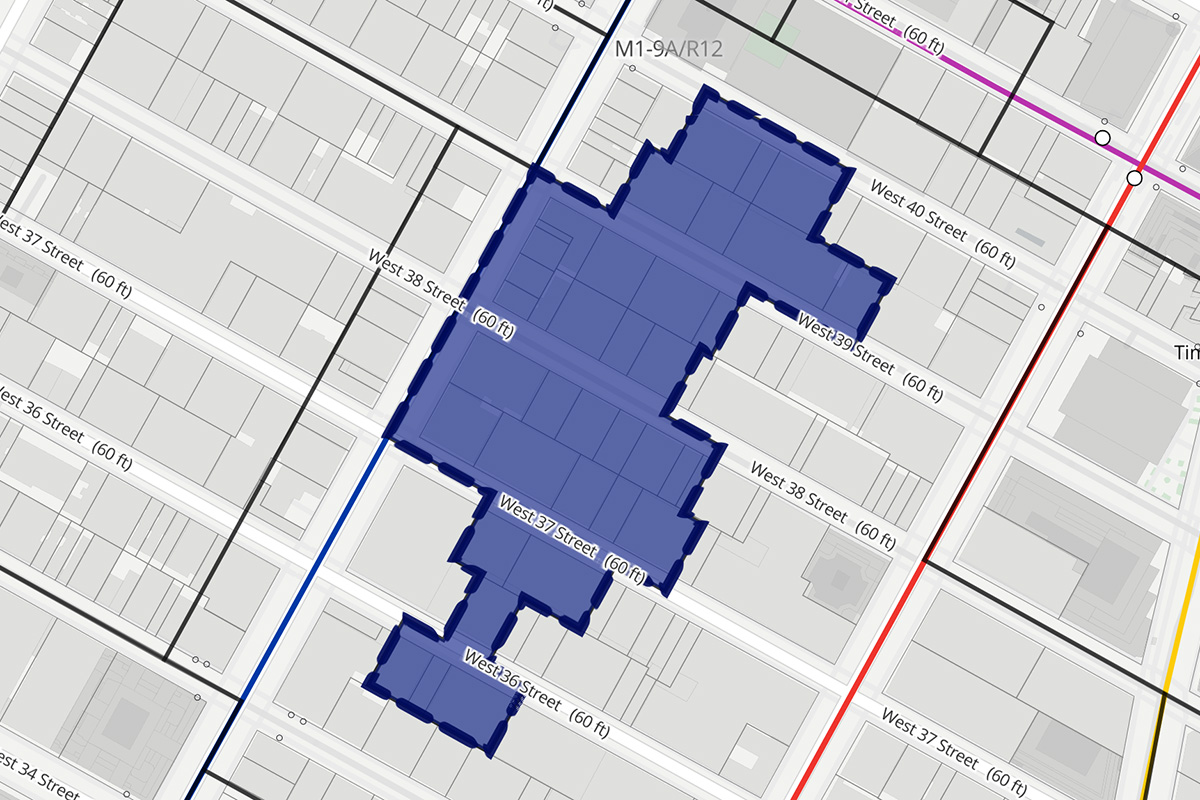
The M1-9A district is a light manufacturing subdistrict within the broader M1 Zoning category. M1-9A zones are located in Manhattan.
I am Jorge Fontan, an architect in New York and owner of Vinculum Architecture, a Manhattan-based architecture firm. At Vinculum, we work on a variety of project types, from property and zoning analysis to complete building designs for new developments. In this article, I will review some of the basics of the New York City Zoning District M1-9A.
M1-9A Zoning
In M1-9A Zoning you can develop commercial, manufacturing and community facility buildings As-of-Right and residential when paired with a residential district in mixed use zoning. There are options for discretionary actions that could also potentially expand the allowable uses in these districts. The City of Yes significantly modified the rules under the New York City Zoning for Housing Opportunity amendment. This article reflects those modifications.
M1 Zoning Districts & Subdistricts
Below is a list of the various M1 zoning districts and M1-9 subdistricts:
M1-9A Zoning & Community Facility Use
The M1-8A Zoning District has primarily manufacturing and commercial uses, but you can develop some community facility uses as-of-right in these districts.
Key considerations for the development of a Community Facility in an M1-9A zone include:
- Different Regulations: When you develop a site with community facility use, the specific bulk regulations (including Floor Area Ratio and height limits) may differ from those for other allowed buildings.
M1-9A Zoning Regulation Basics
Floor Area Ratio:
- FAR = 15
Yards:
- Side Yards = Not Required, but if provided must be a minimum of 8 feet
- Rear Yard below 65 feet = 10 ft minimum
- Rear Yard above 65 feet = 15 ft minimum
- Rear Yard above 125 feet = 20 ft minimum
Height and Setback:
- Base Height Max = 155 ft
- Building Height Max = No Limit
Parking in M1-9A
The new City of Yes for Housing Opportunity zoning changes have now drastically reduced parking requirements in New York City.
Mixed Zoning Districts MX Zoning
In Special Mixed Use Districts (MX), residential development is permitted as-of-right through paired zoning. Unlike standard manufacturing districts where housing is typically prohibited, MX districts combine an M1 light manufacturing district with a specific residential district (e.g., M1-9A/R12) to encourage a balanced, live-work environment.
When developing within a paired MX district, the following rules apply:
- As-of-Right Development: New residential and non-residential uses (commercial or light industrial) can be developed side-by-side or within the same building.
- Split Regulations: For residential portions of a project, you must follow the bulk and density requirements of the paired Residence District. For manufacturing or commercial portions, you follow the regulations of the M1 District.
- Special District Overrides: Any unique regulations established by the Special Purpose District take precedence over underlying rules.
M1-9A Mixed Zoning Districts Include:
- M1-9A/R12
Developing Residential Uses in M1-9A Zoning
It is generally prohibited to develop residential use in an M1 Zoning district but there are a few possibilities to achieve this goal:
- MX Districts: When paired with a residential district you can develop residential use in a manufacturing mixed use district.
- Variance: You can apply for a use variance from the Board of Standards and Appeals. If granted this discretionary action would allow for residential development. Learn more about Variances in NYC.
- Rezoning: There is always an option to rezone your property to a new zoning district. These applications are lengthy and costly but you have the opportunity to obtain a zoning district that is more in line with your intended use. If you are interested in reading mor eon the subject we have another article with more information on the NYC Rezoning Process.
M1-9A Zoning
New York City zoning is complicated and has many special circumstances. This post is intended to provide a brief general overview of M1-9A zoning. This article is not a substitute for the New York City Zoning Resolution.
If you are considering a development project, contact us at Vinculum Architecture for a consultation. We can help you determine the feasibility of your project, provide complete design services, and guide you through the intricate process of obtaining city approvals to bring your vision to life. Succeeding in the NYC real estate market requires a strategic approach to the city’s complex regulatory environment. We offer both vision and expert architectural services.
Thank You for Reading Our Article on M1-9A Zoning In New York City
I hope this was helpful. If you would like to speak with an architect about a potential project, please get in touch with us directly at Vinculum Architecture.
Request a Consultation With Vinculum Architecture
This post was written by Jorge Fontan AIA a Registered Architect and owner of New York City based architecture firm Vinculum Architecture. Jorge Fontan has earned 3 degrees in the study of architecture including two degrees from the City University of New York and a Masters Degree in Advanced Architectural Design from Columbia University. Jorge has a background in construction and has been practicing architecture for 20 years where he has designed renovations and new developments of various building types.