New York City regulates property development through three primary zoning categories: Commercial (C), Manufacturing (M), and Residential (R). Each district and its subsequent subdistricts define specific allowable uses and bulk regulations for any given site. While most commercial districts have a residential equivalent that permits residential development “As-of-Right,” the C8-4 Zoning District lacks these provisions. Typically, rezoning C8-4 districts is the only viable pathway for residential development in these areas.
The C8-4 Zoning District is a heavy commercial zone, uniquely characterized by its strict prohibition of residential use. Primarily located across the Bronx, Brooklyn, Queens, and Staten Island these districts often contain underutilized or obsolete properties that present significant redevelopment opportunities through Zoning Map Amendments. By rezoning these areas to more flexible commercial districts that permit residential development—particularly following the City of Yes reforms—we can directly address the city’s housing shortage while revitalizing and optimizing neighborhoods for much-needed housing.
I am Jorge Fontan, an architect in New York and owner of Vinculum Architecture, a Manhattan-based architecture firm. At Vinculum, we work on a variety of project types, from property and zoning analysis to complete building designs for new developments and, of course, rezonings. In this article, I will explain why rezoning C8 districts can be an excellent opportunity to develop much-needed housing in New York, using examples from our current projects.
The Problem with C8-4 Zoning
The C8-4 Zoning District in New York City is a highly restrictive, heavy commercial zone. Designed primarily for automotive and specific semi-industrial uses, it imposes significant limitations, notably an outright prohibition on residential use and various restrictions on community facilities. From a professional standpoint, these constraints often render C8 properties obsolete, making them challenging to maintain full occupancy.
Our current C8 Rezonings
C8-2 Rezoning: We are currently assisting a client with their vacant office building in a C8-2 Zoning District in Bay Ridge, Brooklyn. The property has remained empty for over five years because the owner could not find a long-term commercial tenant. This prolonged vacancy offers no economic benefit to either the owner or the local community.
Our rezoning strategy includes a zoning map amendment to transition the site from a highly restrictive C8-2 district to a flexible C4-4D district. This change introduces an R8A residential equivalent, allowing for the development of a new mixed-use, multi-family building. Additionally, we are proposing a zoning text amendment to establish a Mandatory Inclusionary Housing (MIH) area, ensuring compliance with current residential and affordability regulations.
Key Features from our proposal:
- Zoning Map Amendment: The Zoning Map will change from a C8-2 at this site to a C4-4D.
- Mandatory Inclusionary Housing (MIH): When proposing rezonings such as this, it is common to include a Zoning Text Amendment to implement MIH.
- Affordability Option 1: There are multiple paths for affordability compliance. This building follows Option 1, which reserves 25% of the units for permanently affordable units.
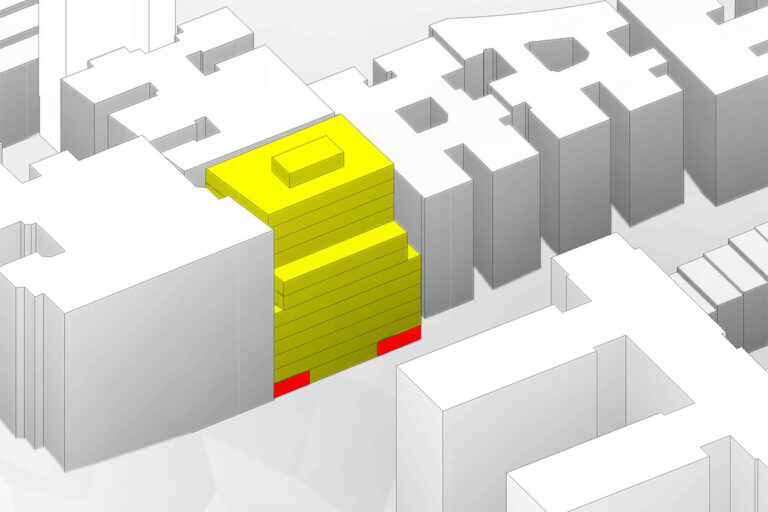
- Mixed-Use Building: The Building will have retail on the ground floor and 10 residential floors above.
- Underground Parking: Although the current City of Yes regulations eliminated parking requirements for sites such as this, we are providing underground parking for the building occupants and retail shoppers.
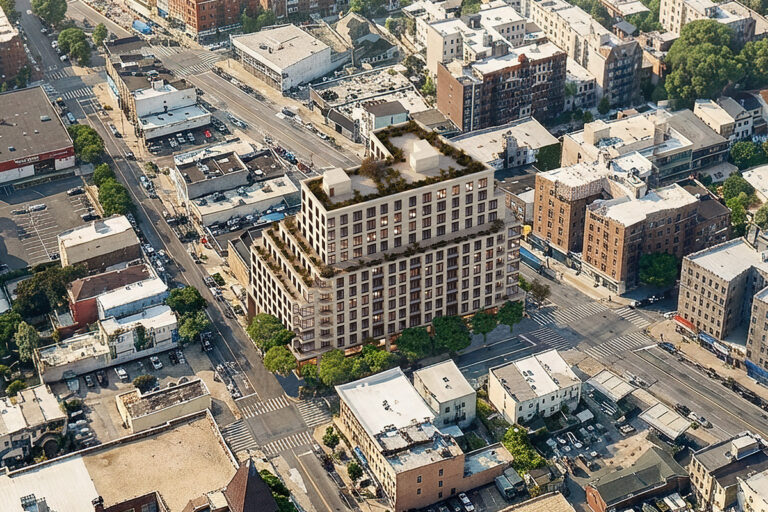
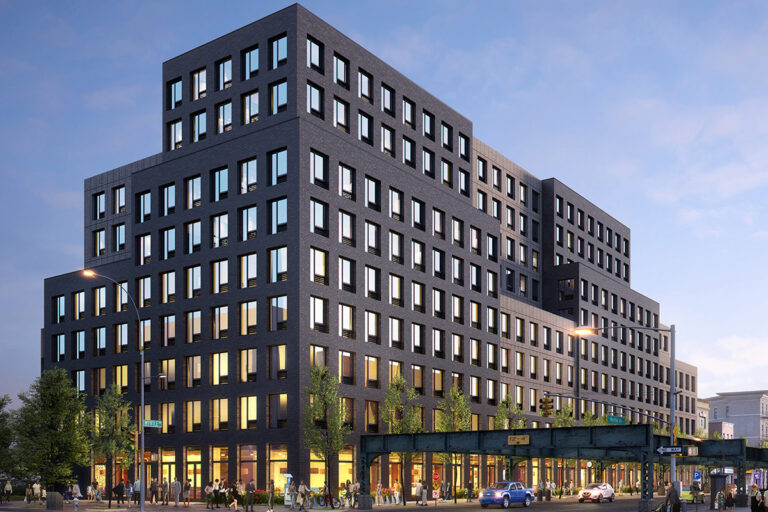
Below is a rendering of the building we designed for this property. Additionally, if you want to learn more, we have another article on Rezoning C8-2 in NYC.
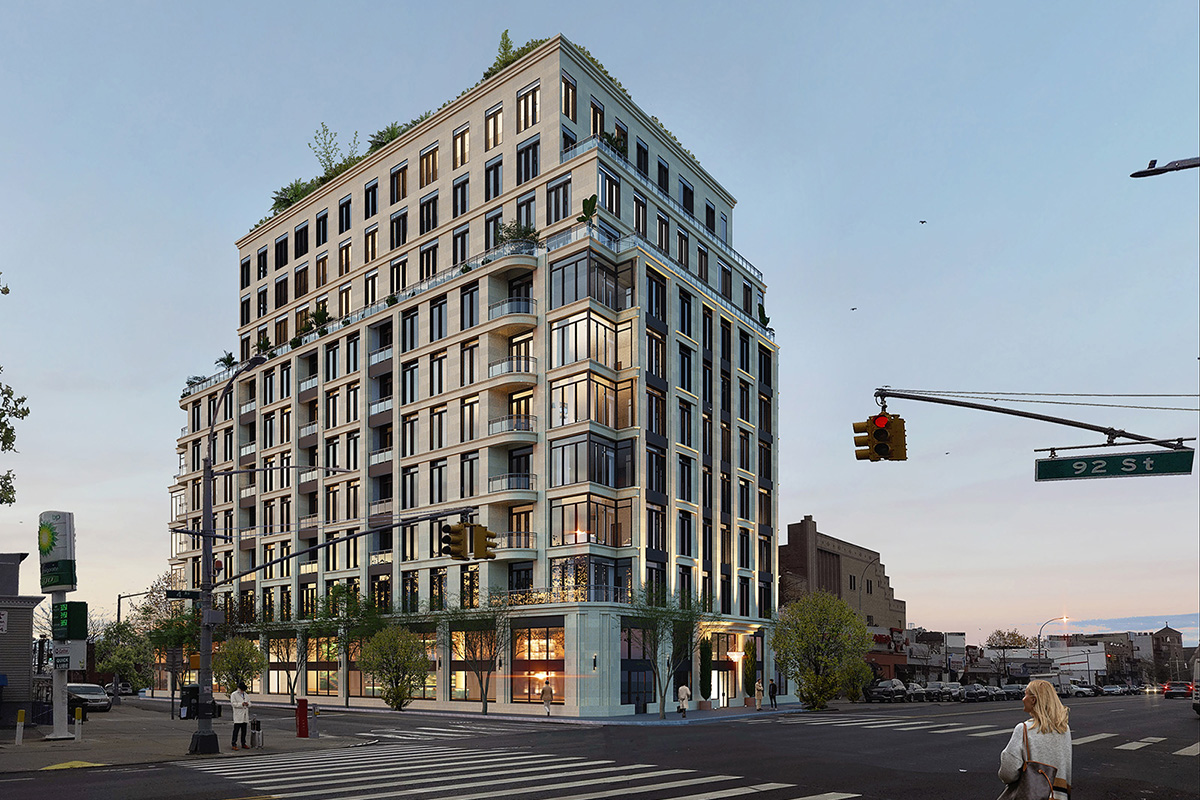
Proposed New Apartment Building Design for C8-2 Rezoning in Bay Ridge, Brooklyn
C8-3 Rezoning in Manhattan: We are also working with a client who owns a small commercial property in an Upper Manhattan C8-3 Zoning District. Currently, the site is significantly underutilized and out of scale with the neighboring landscape, which features high-density multifamily buildings. The restrictive C8-3 designation offers little utility in this context, failing to provide meaningful value to either the owner or the local community.
The strategy for this rezoning includes a zoning map amendment to transition the site from a C8-3 district to an R8 residential district with a C2-4 commercial overlay. To facilitate this change, we are proposing a zoning text amendment to establish a Mandatory Inclusionary Housing (MIH) area. Since the property is currently entirely surrounded by R8 zoning, petitioning the city to extend this designation to our client’s site is a logical and consistent land-use request.
Key Features from our proposal:
- Zoning Map Amendment: The Zoning Map will change from a C8-3 at this site to a R8 with Commercial Overlay C2-4.
- Mandatory Inclusionary Housing (MIH): When proposing rezonings such as this, it is common to include a Zoning Text Amendment to implement MIH.
- Affordability Option 1: There are multiple paths for affordability compliance. This building follows Option 1, which reserves 25% of the units for permanently affordable units.
If you want to learn more, we have another article on Rezoning C8-3 in NYC.
C8 Rezoning Potential
At Vinculum Architecture, we are currently working on rezoning several C8 sites throughout NYC. These zoning districts offer significant development potential through Zoning Map Amendments.
C8 Zoning Districts:
- C8-1
- C8-2
- C8-3
- C8-4
For a comprehensive look at NYC rezonings we have another article on the Rezoning Process.
Rezoning C8-4 Districts
Rezoning C8 Zoning districts is an excellent opportunity for property owners, developers, and communities throughout New York City to bring much-needed housing to underserved areas and update obsolete zoning districts to meet contemporary needs. Many commercial buildings in the C8 Districts are underoccupied or completely vacant. These buildings can be repurposed for residential use or demolished to allow new residential development. Rezonings are the only path forward for such developments.
The City of Yes for Housing Opportunity opens up many possibilities for mixed-income developments. The city has also created a new Affordable Housing Appeals Board, giving rezonings that were previously denied a second chance. These are all moves in the right direction for boosting development in New York City, increasing the housing stock and combating the housing shortage, while bringing new opportunities to underutilized properties.
If you are considering a development project, contact us at Vinculum Architecture for a consultation. We can help you determine the feasibility of your project, provide complete design services, and guide you through the intricate process of obtaining city approvals to bring your vision to life. Succeeding in the NYC real estate market requires a strategic approach to the city’s complex regulatory environment. We offer both vision and expert architectural services.
Thank You for Reading Our Article on C8-4 Rezoning for Residential Use
I hope this was helpful. If you would like to speak with an architect about a potential project, please get in touch with us directly at Vinculum Architecture.
Request a Consultation With Vinculum Architecture
This post was written by Jorge Fontan AIA a Registered Architect and owner of New York City based architecture firm Vinculum Architecture. Jorge Fontan has earned 3 degrees in the study of architecture including two degrees from the City University of New York and a Masters Degree in Advanced Architectural Design from Columbia University. Jorge has a background in construction and has been practicing architecture for 20 years where he has designed renovations and new developments of various building types.